
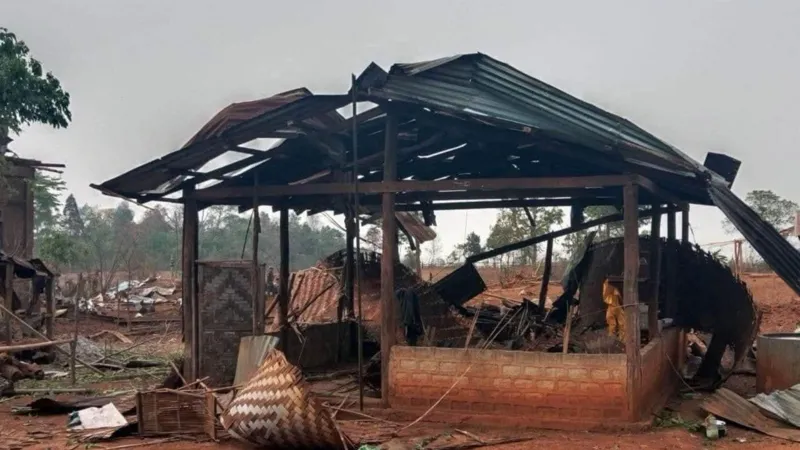
A catastrophic 7.7-magnitude earthquake struck Myanmar’s Sagaing region on March 28, 2025, causing widespread devastation. The tremors, which were felt as far as Thailand and India, resulted in the deaths of at least 1,644 people, with thousands more feared trapped under debris. However, even as the nation reeled from the destruction, Myanmar’s military junta continued airstrikes in conflict-ridden regions, escalating the crisis.
Just three hours after the quake, an airstrike in Naungcho, northern Shan state, killed seven people. Further reports confirmed aerial bombings in Chang-U township in Sagaing, the epicenter of the quake, as well as areas near the Thai border. The UN condemned these attacks as “completely outrageous and unacceptable.” The National Unity Government (NUG), Myanmar’s exiled civilian administration, announced a temporary two-week halt to offensive operations to allow emergency relief efforts.
Indian Army Deploys ‘Operation Brahma’ for Humanitarian Relief
In response to the Myanmar earthquake crisis, the Indian Army launched ‘Operation Brahma’ to provide immediate medical aid. A specialized 118-member task force from the elite Shatrujeet Brigade Medical Responders, led by Lieutenant Colonel Jagneet Gill, was deployed with vital medical equipment and supplies.
The initiative includes setting up a 60-bed Medical Treatment Centre, offering emergency surgeries, trauma care, and essential healthcare services. The Indian Army’s Airborne Angels Task Force, renowned for its disaster relief expertise, will ensure life-saving support to Myanmar’s strained healthcare system.
Thailand’s Skyscraper Collapse Sparks Safety Concerns
While Myanmar suffered the worst of the quake’s impact, neighboring Thailand also felt its tremors, causing significant damage. In Bangkok, a 33-storey high-rise under construction collapsed near Chatuchak Market, killing at least 10 people and trapping dozens. The disaster has raised concerns over the structural integrity of Thailand’s skyscrapers and their ability to withstand seismic activity.
Experts warn that Bangkok’s geological conditions—soft clay soil that amplifies seismic waves—make buildings particularly vulnerable. Amorn Pimarnmas, president of the Structural Engineers Association of Thailand, highlighted that fewer than 10% of Bangkok’s skyscrapers meet earthquake-resistant standards. Additionally, many high-rises were built before modern seismic codes were introduced, and a lack of retrofitting has left older structures at risk.
Future Implications of the Political Unrest
The Myanmar earthquake crisis has not only led to a humanitarian disaster but also exacerbated political and security tensions. As international aid agencies struggle to provide relief amidst continued airstrikes, questions arise over Myanmar’s future stability. With India stepping in for disaster relief and Thailand reevaluating its building safety regulations, the regional impact of this crisis remains a key concern.
The coming weeks will determine whether Myanmar’s military will allow full-scale humanitarian aid to reach affected areas or if the ongoing conflict will hinder relief efforts. Meanwhile, the aftermath of the earthquake underscores the urgent need for stricter disaster preparedness in Thailand and other seismic-prone regions.
Deadly Tremor Strikes Myanmar and Thailand: WHO Warns of Humanitarian Crisis
Leave feedback about this