
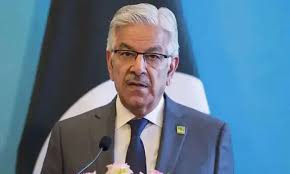
What exactly did Khawaja Asif say?
Pakistani Defence Minister Khawaja Muhammad Asif has alleged that the ongoing conflict involving Iran, Israel and the United States is part of a “Zionist plan” designed to extend Israel’s influence up to Pakistan’s borders and ultimately reduce Pakistan to a “vassal state.” Speaking in parliament and in subsequent media coverage, he warned that if Israel emerges stronger from the Iran war, Afghanistan, Iran and India could converge around a “single‑point agenda” of hostility towards Pakistan. He framed this as a broader strategy to “surround” Pakistan with adversaries and to undermine its security on all sides.

Asif also urged Pakistan’s public to recognise what he called a common “conspiracy” by “mutual enemies,” placing his remarks firmly in the register of national mobilisation rather than technical policy debate. His language fits within a longer pattern in which he has described Israel as a standing threat to regional peace and emphasised solidarity with Iran against “unprovoked” Israeli actions.

Official signals from Islamabad
While Khawaja Asif’s latest remarks are the sharpest, they are consistent with Pakistan’s recent official positioning on the Iran–Israel front. Islamabad has publicly condemned Israeli strikes on Iranian territory and warned of the risk of a wider regional war, stressing its “complete solidarity” with Iran in earlier official comments. At the same time, Pakistan remains wary of direct escalation on its own western border, given its over 900‑km frontier with Iran and recent episodes of cross‑border tensions.
The government’s messaging therefore oscillates between support for Iran as a “brotherly” country and an emphasis on Pakistan’s need to avoid becoming a battlefield in the Iran–Israel confrontation. In this context, the phrase Israel Iran war Pakistan encirclement encapsulates both solidarity rhetoric and deep security anxiety in Islamabad.
India’s place in the ‘vassal state’ narrative
Asif’s comments explicitly name India as part of a possible hostile alignment alongside Iran and Afghanistan in the event of an Israeli strategic gain. He suggests that New Delhi could benefit from, or participate in, a broader regional order that leaves Pakistan diplomatically and strategically isolated. This framing builds on long‑standing Pakistani concerns over India’s deepening ties with Israel in defence and intelligence, and India’s growing footprint in West Asia.
However, there is no parallel official confirmation from Indian or Iranian authorities of any coordinated design aimed at Pakistan’s “vassalisation.” For now, the idea of an India–Israel–Afghanistan nexus encircling Pakistan remains a Pakistani political and strategic reading of the fallout of the Iran conflict, rather than a documented regional pact. Even so, the debate around Israel Iran war Pakistan encirclement will likely sharpen India–Pakistan messaging in multilateral forums.
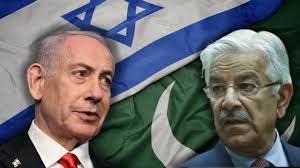
Domestic politics, security calculus and Iran
Asif’s choice of words also serves a domestic purpose: it links Pakistan’s internal security and unity to external threats, tying together concerns over militancy on the Afghan frontier, sectarian tensions, and the evolving Iran front. By warning that Pakistan could be “surrounded” if Iran is weakened, he frames the Iran war not as a distant Middle Eastern crisis but as a direct challenge to Pakistan’s strategic depth. This is particularly sensitive given Islamabad’s own recent, carefully managed military and diplomatic exchanges with Tehran after earlier cross‑border strikes.
His rhetoric also reinforces Pakistan’s long‑standing narrative that Zionism has played a central role in conflicts affecting the Muslim world, a theme he has voiced before on television and social media. Within that narrative, the phrase Israel Iran war Pakistan encirclement functions as a unifying slogan linking Gaza, Iran and Pakistan’s own security debates in the public mind.
What this means for regional geopolitics?
Strategically, Asif’s intervention underlines Pakistan’s fear of a post‑Iran‑war regional order in which Israel’s reach extends closer to its borders, while India consolidates its partnerships across West Asia. It also signals that Islamabad will continue to frame its Iran policy through the lens of preventing Israel Iran war Pakistan encirclement, even as it tries to avoid direct confrontation with either camp. For outside observers, the remarks are less evidence of a formal “plan” than of how fluid and mistrustful the regional environment has become.
In diplomatic terms, this raises the stakes for any future escalation between Iran and Israel, since Pakistan now openly links outcomes on that front to its own core security interests. It also ensures that any move by India or Israel in the wider region will be read in Islamabad through the prism of encirclement, making crisis management and signalling even more delicate in an already volatile neighbourhood.
Why the US–Israel Strategic Partnership Shapes Today’s Geopolitics
Leave feedback about this