
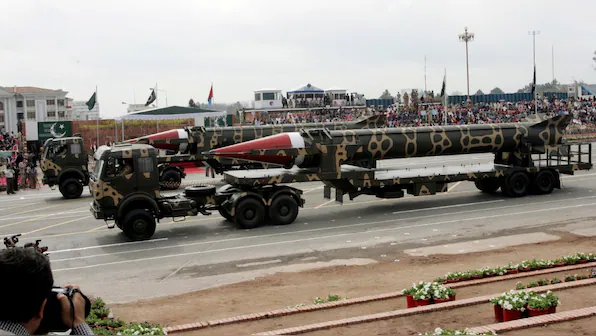
In a development that could reshape the balance of power in South Asia, a fresh intelligence report from the United States has revealed that Pakistan is modernising its nuclear arsenal with significant support from foreign nations, including China, Turkey, and the UAE. The report, released by the U.S. Defence Intelligence Agency (DIA) on May 25, points to increasing concern over the country’s nuclear trajectory and the potential risk of weapons of mass destruction (WMD) proliferation.
The classified report—now made public—paints a picture of a Pakistani military establishment focused on upgrading its nuclear capabilities while maintaining strategic readiness along its border with India, a country it still views as its most formidable adversary.
“Pakistan is modernising its nuclear arsenal and maintaining the security of its nuclear materials and command structures,” the report notes, adding that the country “almost certainly procures WMD-applicable goods from foreign suppliers and intermediaries.”
Foreign Collaboration Fuelling Pakistan’s Nuclear Progress
While Islamabad officially claims its nuclear programme is for deterrence and national security, the DIA report underscores that foreign collaboration is playing a key role in advancing its capabilities. China has been highlighted as the main supporter—offering both technological and economic backing—as Pakistan expands and refines its nuclear command and control systems.
Beyond China, the report suggests that Turkey and the UAE may also be providing indirect technological resources that could be repurposed for WMD applications. This raises fresh concerns among global watchdogs about unchecked proliferation risks in volatile regions.
The revelation that Pakistan is modernising its nuclear arsenal through foreign-sourced technologies has prompted quiet conversations in Washington, New Delhi, and other capitals about potential policy recalibrations.
India Still the Core Strategic Focus
Despite regional instability and global concerns over terrorism, the DIA asserts that Pakistan’s strategic doctrine continues to revolve primarily around India. The nuclear build-up, therefore, isn’t just about technological advancement—it’s a response to long-standing geopolitical tensions that show little sign of easing.
“While Pakistan engages with its regional partners, it remains deeply focused on its eastern frontier,” the report explains. This includes occasional cross-border tensions, conventional military developments, and the perceived threat of Indian strategic dominance.
Read More: AI Revolution in Five Years: DeepMind CEO Urges Gen Alpha to Gear Up
WMD Risks and International Oversight
The most alarming aspect of the DIA’s findings is Pakistan’s procurement strategy, which allegedly includes foreign-sourced goods that could be repurposed for nuclear or dual-use systems. Such transfers—especially from states like China and Turkey—may violate international non-proliferation norms, depending on the nature of the materials and technologies exchanged.
As Pakistan modernises its nuclear arsenal, questions arise about international safeguards, the opacity of regional arms transfers, and the risk of escalating instability in South Asia—a region already brimming with historical animosity and military flashpoints.
A Critical Juncture for South Asian Security
The DIA report serves as both a revelation and a warning. It highlights how foreign collaboration is subtly shifting the nuclear landscape in South Asia and how long-standing rivalries continue to shape military strategy. The world may need to brace for a new chapter in regional power dynamics, one driven by a quiet arms race with global implications.
As Pakistan modernises its nuclear arsenal, international actors may soon be compelled to re-evaluate their policies, sanctions regimes, and diplomatic engagement with countries aiding this transformation.
Leave feedback about this