
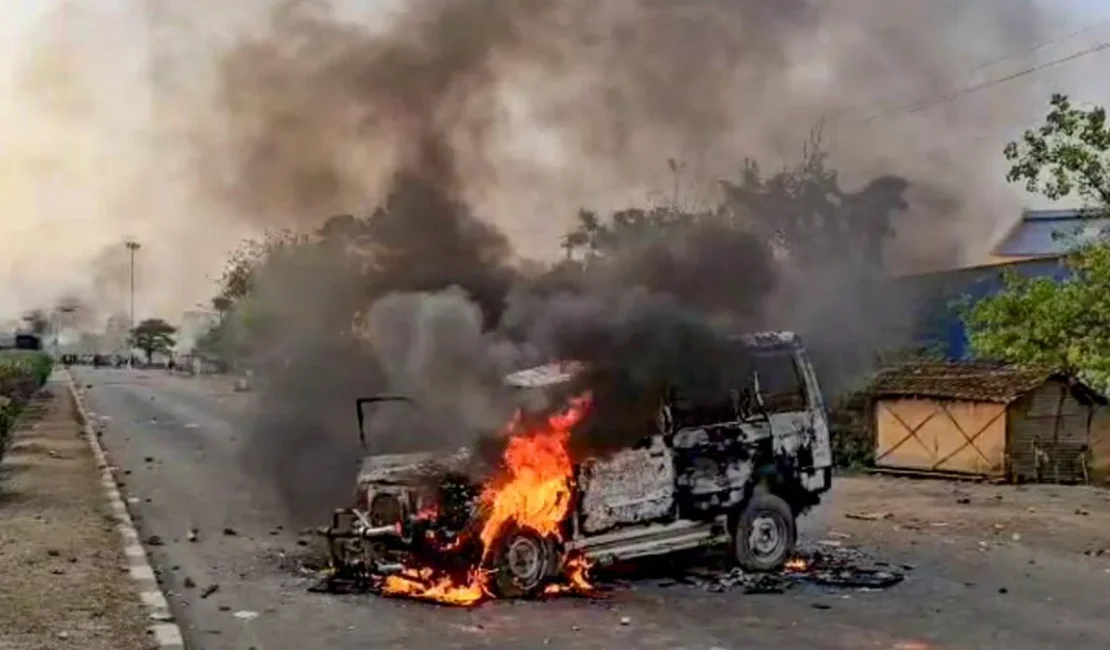
In a dramatic turn of events, large-scale unrest has gripped parts of West Bengal, especially Murshidabad, following the implementation of the Waqf (Amendment) Act, 2025. The protests, which began as sporadic demonstrations, escalated into violent clashes, leading to the deployment of five companies of the Border Security Force (BSF) to assist the state police in restoring order.
The Waqf Act protests in Murshidabad have triggered political turmoil, disrupted daily life, and raised questions about governance, communal harmony, and legislative consultation. Roads were blocked, vehicles torched, train services were suspended, and internet access was restricted in several areas as authorities moved swiftly to contain the violence.
#WATCH | Murshidabad violence | West Bengal | Inspector General of South Bengal Frontier, BSF, Karni Singh Shekhawat reached the violence-hit area after the Calcutta High Court ordered deployment of central forces in the affected area. (12.04) pic.twitter.com/9smP0vfTAh
— ANI (@ANI) April 12, 2025
A Law, A Spark
The amended Waqf Act, passed in both Houses of Parliament and brought into force on April 8, has drawn sharp criticism, particularly from minority communities who believe the law lacks clarity and transparency. Critics argue it centralizes control over religious endowments and fails to address concerns of stakeholders at the grassroots level.
Chief Minister Mamata Banerjee, distancing herself from the legislation, made a bold announcement on Saturday. “We did not make this law. It was passed by the central government. We do not support it, and it will not be implemented in West Bengal,” she declared in a post on X (formerly Twitter). “So what is the riot about?” she asked, suggesting the unrest was being politically manipulated.
Her remarks came after the Calcutta High Court, taking note of the deteriorating law and order situation, ordered the deployment of central forces. The court emphasized that constitutional authorities could not afford to remain indifferent during such a crisis.
Political Fallout
The political reaction was immediate. BJP’s West Bengal president and Union Minister Sukanta Majumdar launched a scathing attack on the Banerjee government. “The situation is out of control due to Mamata Banerjee’s failure to govern,” he stated, adding that the High Court’s order was a “slap on her administration.”
Majumdar alleged that the state police had been inactive during the violence and claimed that certain groups were allowed to act with impunity. He accused Banerjee of “vote bank politics,” warning that such a leadership approach could plunge the state into another episode of communal unrest similar to the Great Calcutta Killings.
On the Ground
In Murshidabad, the Waqf Act protests have left deep scars. Burnt police vehicles, shattered storefronts, and frightened residents paint a grim picture. Prohibitory orders have been issued, and internet services remain suspended in multiple regions. While the state administration insists the situation is under control, the tension on the ground tells a different story.
Observers point out that the violent response reflects both administrative missteps and a lack of transparent communication about the Act’s implications. With both the state and central governments passing the blame, ordinary citizens are left to navigate fear, confusion, and insecurity.
#WATCH | Kolkata: On Murshidabad violence, West Bengal BJP president and Union Minister Sukanta Majumdar says, “The situation is very terrible. The special bench of the High Court has given the verdict, and we welcome it. The situation has become like this because of Mamata… pic.twitter.com/apHdmvcemV
— ANI (@ANI) April 12, 2025
What’s next?
As the dust settles, the key challenge will be ensuring accountability and dialogue. The Waqf Act protests in Murshidabad are a reminder that laws, especially those touching on faith and property, require inclusive consultation. Without it, they risk igniting the very unrest they aim to resolve.
While Chief Minister Mamta Banerjee’s rejection of the law has been applauded by some as a stand for federalism, critics argue that her administration failed to prevent or properly manage the outbreak of violence. As central forces continue operations in sensitive districts, the spotlight remains firmly on both Kolkata and New Delhi to find a path toward peace.
Markets in Meltdown: China Retaliatory Tariffs 2025 Spark Global Sell-Off
Leave feedback about this