
What Led to the Clashes in Kathmandu?
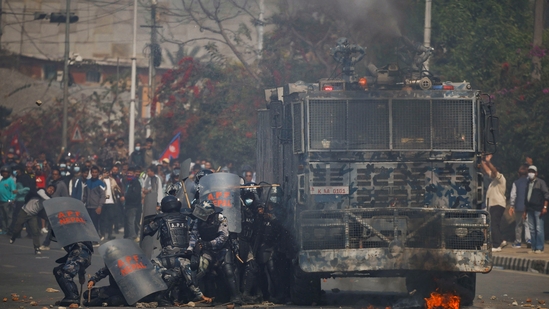
A state of unrest unfolded in Nepal’s capital, Kathmandu, as pro-monarchy protests escalated into violent clashes with security forces, leading to a curfew in several areas. Demonstrators demanding the reinstatement of Nepal’s Hindu monarchy clashed with the police, resulting in arson, vandalism, and injuries on both sides.
Who Was Involved in the Protest?
The demonstrations were led by pro-monarchy groups, including the Rastriya Prajatantra Party and other royalist supporters. Protesters waved Nepal’s national flag and carried images of former King Gyanendra Shah, chanting slogans like “Raja aau desh bachau” (May King come to save the country) and “Down with the corrupt government.”
Meanwhile, anti-monarchy activists, backed by left-wing parties, also gathered in Kathmandu, led by the Socialist Front and the Communist Party of Nepal (Maoist Centre). They opposed the calls for monarchy, asserting their commitment to Nepal’s republican structure.
Where Did the Violence Erupt?
The most intense confrontations took place in the Tinkune area of Kathmandu, where protesters set fire to a house and attempted to breach security barricades. Police responded by using tear gas, water cannons, and blank rounds to disperse the demonstrators. Several protesters and security personnel were injured during the chaos, and some were hospitalized at Kantipur Hospital.
When Did the Protests Escalate?
The violence broke out on March 9, following a surge in pro-monarchy sentiments after former King Gyanendra’s public appeal on Democracy Day (February 19). His supporters have been increasingly vocal, citing dissatisfaction with Nepal’s democratic system and economic instability.
Why Are Monarchists Demanding the King’s Return?
Nepal abolished its 240-year-old monarchy in 2008, transitioning to a secular, federal democratic republic. However, rising political discontent, economic hardships, and perceptions of government corruption have fueled demands for the return of the monarchy. Royalist factions believe that reinstating the king would restore national stability and cultural identity.
How Did the Government Respond?
Authorities imposed a curfew in Kathmandu, particularly around Tinkune and New Baneshwor, to prevent further escalation. Police arrested several demonstrators who attempted to march into restricted areas. The government has reiterated its commitment to democracy, with leaders such as CPN-Maoist Centre chief Pushpakamal Dahal ‘Prachanda’ addressing anti-monarchy rallies, urging citizens to uphold Nepal’s republican system.
Future Implications of the Political Unrest
The recent clashes highlight the deep political divide in Nepal between monarchists and republicans. While the monarchy remains a symbol of national pride for some, others see democracy as the only way forward. The government’s response in the coming weeks will be crucial in determining whether these tensions subside or escalate into a larger political crisis.
Disclaimer: This article is based on the reports available on internet.
Leave feedback about this