

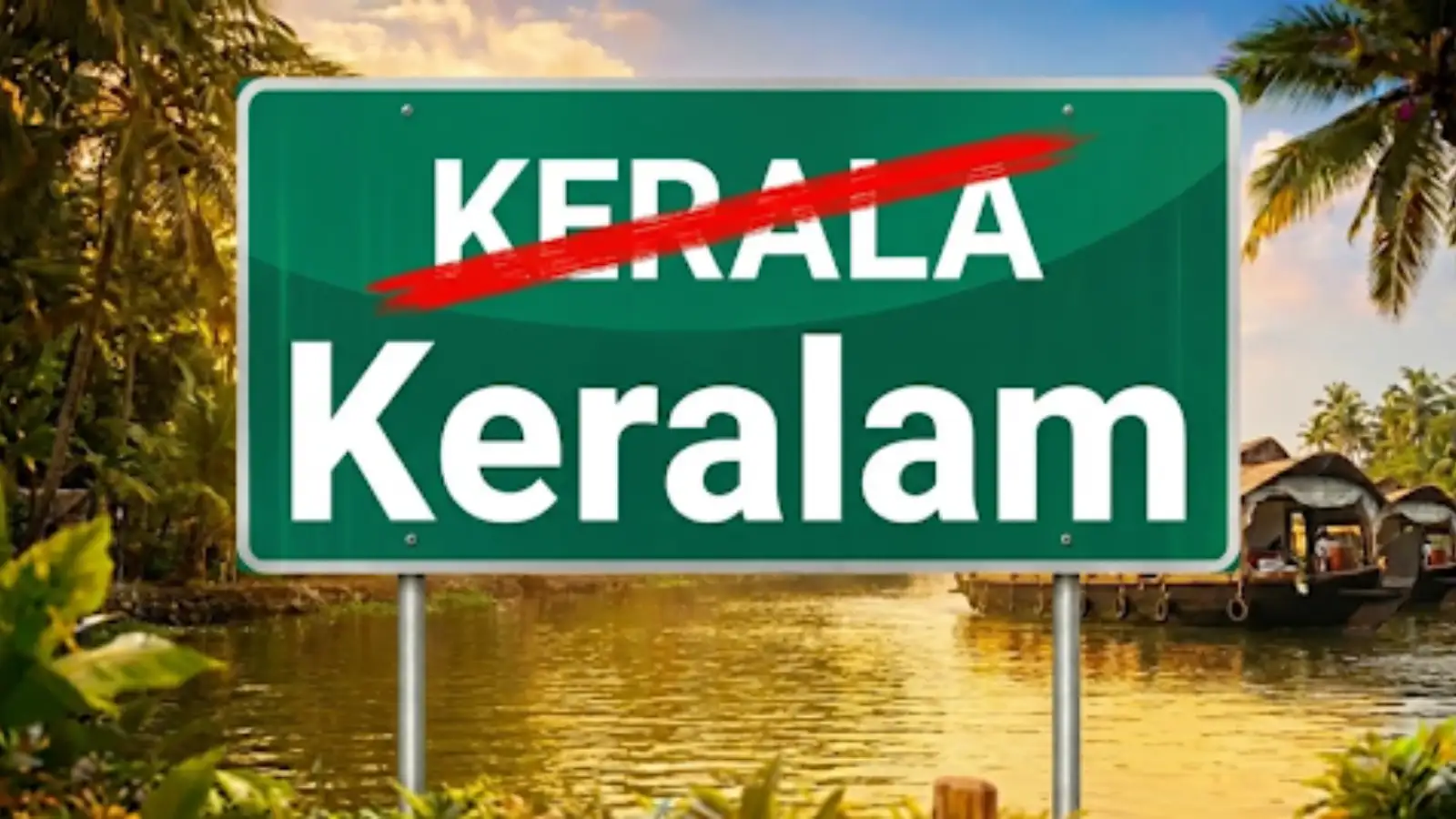
New Delhi: In a landmark move for India’s linguistic federalism, the Union Cabinet, chaired by Prime Minister Narendra Modi, officially cleared the proposal for the renaming of Kerala to Keralam on February 24, 2026. This decision, taken during the first-ever cabinet meeting at the newly inaugurated Seva Teerth complex, marks a decisive step in aligning the constitutional name of the state with its native Malayalam pronunciation.
The Linguistic Logic: Why ‘Keralam’?
The demand for this change is not new; it is a decade-old aspiration rooted in the “Aikya Kerala” (United Kerala) movement of the 1920s. While the state was formed on linguistic lines on November 1, 1956—merging the Malayalam-speaking regions of Malabar, Kochi, and Travancore—the Constitution’s First Schedule recorded the name in its anglicized form, “Kerala.”
In Malayalam, the state is and has always been “Keralam.” Chief Minister Pinarayi Vijayan, who moved the unanimous resolution in the State Assembly twice (once in 2023 and again in June 2024), argued that “Kerala” was a colonial convenience. By pursuing the renaming of Kerala to Keralam, the state seeks to honor its linguistic heritage. Etymologically, “Keralam” is believed to be derived from Kera (coconut) and Alam (land), literally translating to the “Land of Coconuts”—a central pillar of the state’s geography and economy.

The Constitutional Roadmap: Article 3
Unlike changing a city’s name, altering a state’s name is a complex legislative journey governed by Article 3 of the Indian Constitution. Now that the Union Cabinet has provided its “nod,” the process follows a strict sequence:
-
Presidential Referral: The President of India will refer the Kerala (Alteration of Name) Bill, 2026 back to the Kerala Legislative Assembly for its views.
-
Assembly Feedback: The state assembly must express its views within a specified period. While these views are not binding on Parliament, they are a mandatory procedural safeguard.
-
Parliamentary Approval: Once the views are received, the Bill will be introduced in Parliament. It requires a simple majority in both the Lok Sabha and Rajya Sabha to pass.
-
Presidential Assent: After passing through Parliament, the President signs the Bill, officially amending the First Schedule of the Constitution.
Political Consensus and Global Resonance
The renaming of Kerala to Keralam has seen rare bipartisan support. Even the state unit of the BJP, led by former Union Minister Rajeev Chandrasekhar, backed the move, noting that it honors the “civilizational continuity” of the Malayali people.
However, the debate has also sparked lighthearted cultural discourse. Congress MP Shashi Tharoor famously questioned the linguistic shift for English speakers, jokingly asking if residents would now be called “Keralamites.” Despite the banter, the core of the issue remains a serious affirmation of regional identity.
Impact on Records and Administration
Once the renaming of Kerala to Keralam is finalized, every official record, from the Eighth Schedule of the Constitution to international passports and central government notifications, will reflect the new name. For the common citizen, the change may feel subtle—as “Keralam” is already the term of choice in local speech—but constitutionally, it represents the closing of a colonial chapter and the fulfillment of a linguistic promise made in 1956.
Pakistan’s Security Calculus: Navigating the New Delhi-Tel Aviv Defense Corridor
Leave feedback about this