
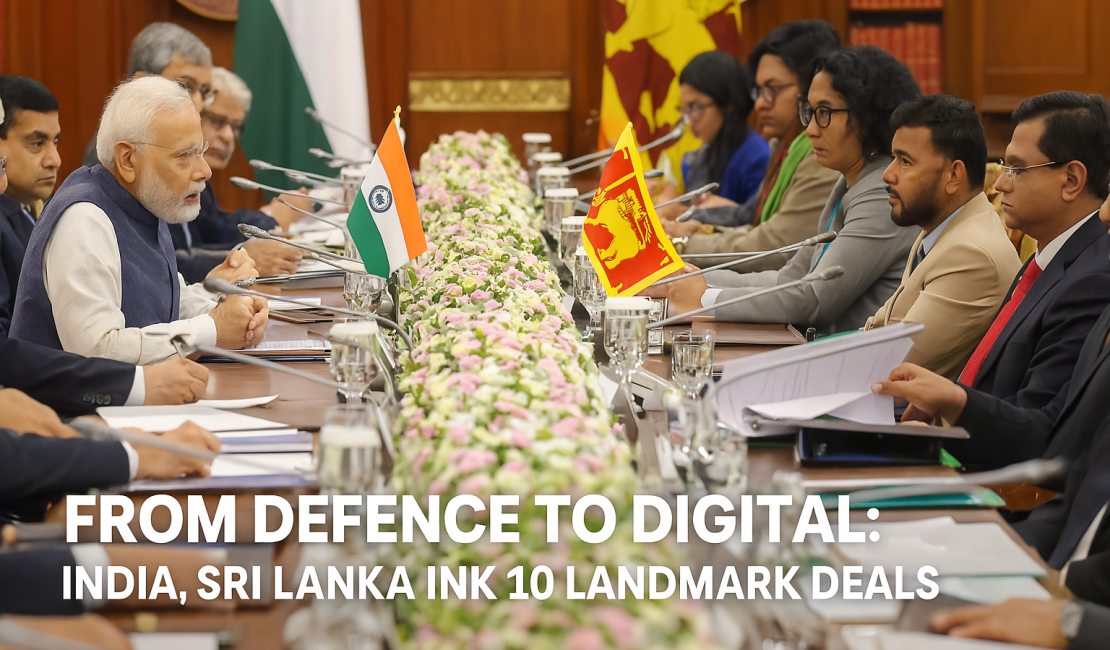
Colombo – In a significant diplomatic stride, India and Sri Lanka on Saturday signed a landmark defence cooperation pact as part of a broader roadmap to boost bilateral ties. The move comes during Prime Minister Narendra Modi’s official visit to Sri Lanka, marking the first such strategic framework between the two nations. The visit underscored a broader diplomatic push to deepen India-Sri Lanka bilateral agreements across sectors such as defence, energy, health, and digital transformation.
Key Defence Pact Sets New Precedent
Prime Minister Modi, following discussions with Sri Lankan President Anura Kumara Dissanayake, emphasized that the “security of both countries is interlinked and dependent on each other.” The MoU on defence cooperation aims to formalize joint military exercises, training programmes, and strategic exchanges. President Dissanayake affirmed that Sri Lanka would not permit its territory to be used in any way that might jeopardize India’s security.
Energy Collaboration with Strategic Trincomalee Focus
The two leaders also laid the foundation for the Sampur Solar Power Project in Trincomalee, positioning the region as a future energy hub. This initiative, backed by Indian support, was complemented by a tripartite agreement involving the United Arab Emirates for the construction of a multi-product pipeline, further boosting regional energy security. Modi noted, “All the people of Sri Lanka will benefit from the agreements signed for building a multi-product pipeline and developing Trincomalee as an energy hub.”
Electricity Grid Interconnectivity MoU Signed
Another notable agreement includes the signing of a MoU to interconnect the national electricity grids of India and Sri Lanka. This initiative is expected to facilitate power trade and allow Sri Lanka to explore energy export opportunities, advancing both nations’ energy independence goals.
Digital Infrastructure and Governance Support
Among the 10 India-Sri Lanka bilateral agreements, a key component focused on digital transformation. India pledged to share its expertise and digital public infrastructure solutions to assist Sri Lanka’s tech-driven governance goals. The key phrase, India-Sri Lanka bilateral agreements, defines the strategic intent of the visit, reflecting a broader diplomatic push to deepen cooperation across defence, energy, health, and digital sectors.
From Decline to Revival: Vulture Numbers Increase in Latest Southern States Census
Support for Religious Institutions and Grassroots Development
A $17 million credit assistance package from India will fund the installation of solar rooftop systems at 5,000 religious institutions across Sri Lanka. This initiative is inclusive, benefiting Hindu, Buddhist, Christian, and Muslim shrines while contributing 25 MW of renewable energy to the national grid. Additionally, India pledged 2.4 billion Sri Lankan rupees to promote socio-economic development in Sri Lanka’s Eastern Province.
Health and Medical Sector Cooperation Deepened
Two separate MoUs were signed in the health sector: one between the respective ministries of health to enhance collaboration in public health and another between the Indian Pharmacopoeia Commission and Sri Lanka’s National Medicines Regulatory Authority. These aim to strengthen pharmacopoeial standards and regulatory frameworks.
The Real Voice of Regional Cooperation
India’s sustained outreach reflects the real voice of South Asia’s commitment to mutual growth and security. As Modi remarked, these agreements go beyond symbolism to signal a future-oriented partnership anchored in trust and shared interests.
Gold Prices Set to Soar: Could $3,500 an Ounce Be the New Reality?
Leave feedback about this