

The Sky Over Delhi Turns Into a Laboratory
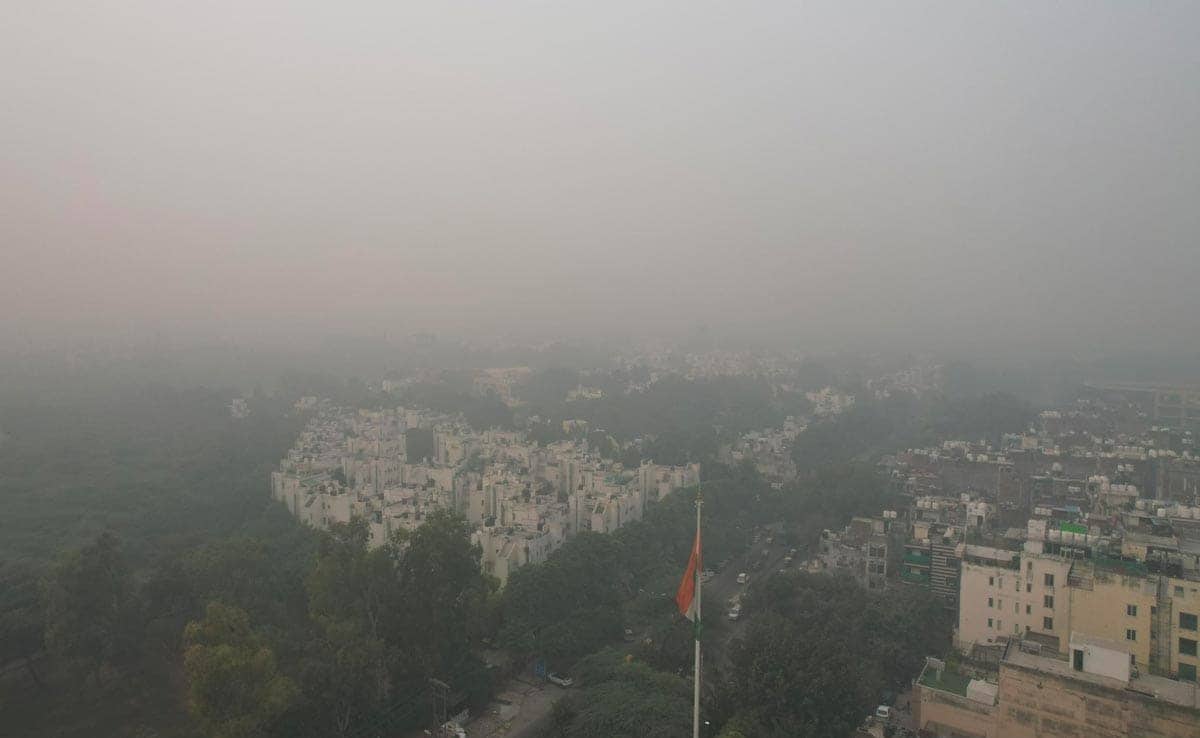
In an unprecedented move to battle one of the world’s worst air quality crises, the Delhi government has decided to experiment with cloud seeding in Delhi — a weather modification technique that aims to induce artificial rainfall. As the national capital chokes under a dense layer of smog every winter, the administration, in collaboration with scientists from premier institutes like IIT-Kanpur, plans to trigger rain to help settle airborne pollutants.
The idea may sound futuristic, but it’s not new. The government has been exploring cloud seeding for several years, particularly when pollution levels cross “severe plus” categories and traditional measures — such as road restrictions, construction bans, and smog towers — fail to yield results.
This year, amid AQI readings soaring above 450, Delhi has once again turned its eyes skyward — not for a prayer, but for a potential technological breakthrough.

What Is Cloud Seeding and How Does It Work?
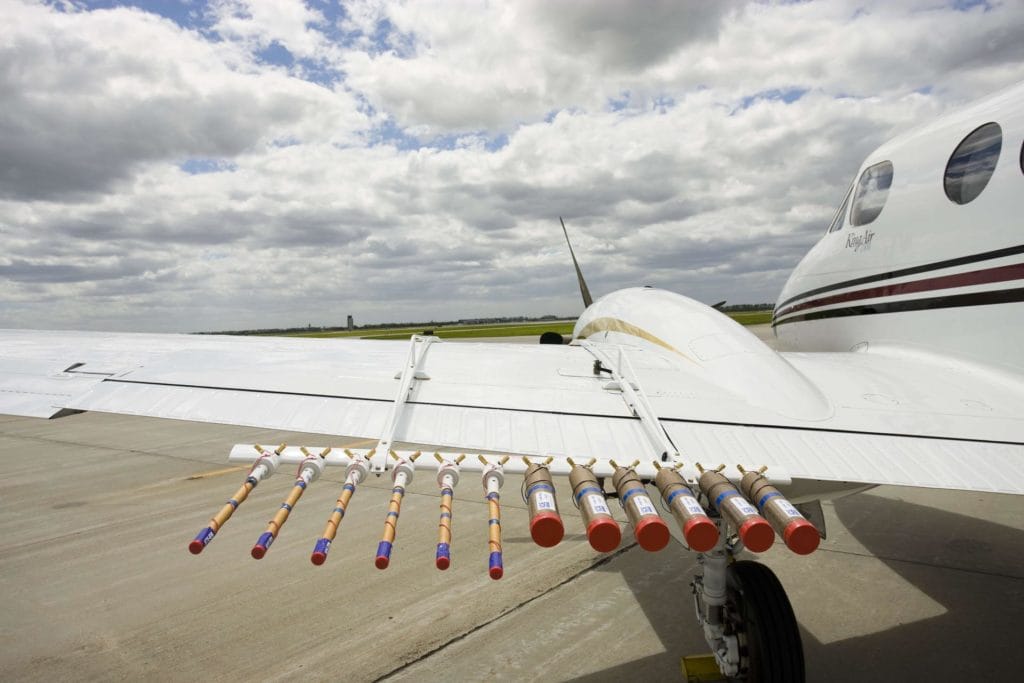
Cloud seeding is a scientific process of artificially inducing rainfall by dispersing certain chemical agents into the clouds to accelerate condensation. These agents, typically silver iodide, potassium iodide, or dry ice (solid carbon dioxide), act as nuclei around which water vapor can condense to form droplets that eventually fall as rain.
In simpler terms, cloud seeding gives clouds a little “push” to do what they naturally do — rain. However, the process only works when there are enough moisture-laden clouds in the atmosphere; it cannot create clouds out of thin air.
The operation generally involves aircraft or drones that spray seeding material at specific altitudes where clouds are mature but not yet raining. The effectiveness depends on meteorological conditions such as humidity, wind speed, and cloud thickness.
Scientists often call it a “calculated gamble” — a mix of meteorology, chemistry, and luck.
Why Cloud Seeding in Delhi Now?
The decision for cloud seeding in Delhi comes as the city faces an annual pollution emergency. From stubble burning across Punjab and Haryana to vehicular emissions and industrial waste, the city’s air turns hazardous every October and November.
In recent years, despite bans on firecrackers and the odd-even road rationing scheme, particulate matter levels (PM2.5 and PM10) continue to breach dangerous limits. In 2025, as smog thickened to levels comparable to smoking 25 cigarettes a day, authorities began exploring cloud seeding as a last resort to trigger artificial rain and help clear the air.
This is not the first time the idea has been floated. Back in 2018 and 2019, similar proposals were made but were shelved due to unfavorable weather conditions. What makes 2025 different is the improved technology and satellite-based weather modeling, which allows for better prediction of cloud formation windows.
If the operation succeeds, it could mark a significant step toward mitigating Delhi’s recurrent air quality disasters.

How the Process Will Unfold
According to the plan, two aircraft equipped with advanced cloud seeding systems will take off from nearby airfields when favorable cloud conditions appear. These planes will release a fine mist of silver iodide into pre-identified cloud clusters over the NCR region.
Ground-based weather radar systems will monitor the process in real time. Scientists will assess the impact through rainfall measurement, satellite imagery, and air quality data before and after the event.
The project aims to achieve at least 2–4 mm of rainfall, enough to settle dust and pollutants without causing flooding. Officials emphasize that this is an experimental trial, and its success could lead to a larger-scale operation across North India.
The Global Story: Weather Modification Across the World
Cloud seeding is not a novel concept globally. Countries facing drought or air pollution have used it for decades.
-
China has one of the world’s largest weather modification programs, especially to ensure clear skies during major events like the 2008 Beijing Olympics.
-
The United Arab Emirates regularly uses cloud seeding to tackle water scarcity, with hundreds of missions every year.
-
The United States, particularly states like Texas and California, have used it for agricultural and hydrological benefits.
-
Thailand and Israel have conducted cloud seeding projects to enhance rainfall and counter drought conditions.
However, the results remain mixed — some operations lead to measurable rain, while others produce little to no impact. The unpredictability stems from the chaotic nature of weather systems.
When Artificial Rain Turns Extreme
While cloud seeding in Delhi aims to wash away smog, the same technology has, in some cases, been linked to extreme rainfall and localized flooding elsewhere.
For instance, in 2023, parts of the UAE experienced record-breaking rain after cloud seeding missions coincided with naturally strong convection, leading to urban flooding. Similarly, in China’s arid Gansu province, excessive seeding was blamed for flash floods that damaged farmlands.
Experts clarify that while cloud seeding itself may not directly cause floods, poor timing or over-seeding can amplify existing weather systems, tipping them toward extremes. This is why meteorological precision and scientific oversight are critical.
For Delhi, which already struggles with waterlogging after every heavy rain, such risks must be factored into the planning.
Environmental and Ethical Concerns
Despite its promise, cloud seeding raises a host of environmental and ethical debates. Critics question whether altering rainfall patterns in one region could deprive another of natural precipitation. Others express concerns about the long-term effects of silver iodide on soil and water.
Although the concentrations used are typically low and considered non-toxic, long-term accumulation remains a grey area in environmental studies. Additionally, manipulating the weather blurs ethical boundaries — can humans justifiably “engineer” nature to solve problems of their own making?
Environmentalists argue that cloud seeding should not become an excuse to ignore root causes like emissions, deforestation, and unregulated urbanization.
India’s Tryst with Artificial Rain
India has experimented with cloud seeding for over four decades. States like Maharashtra, Karnataka, Tamil Nadu, and Andhra Pradesh have conducted multiple projects, primarily to boost rainfall during drought years.
Maharashtra’s 2015 experiment, in collaboration with Israeli experts, showed limited success but helped refine operational strategies. Similarly, Karnataka’s “Varshadhare” project in 2019 used radar-based targeting to induce rain over parched districts.
However, Delhi’s initiative is unique because its goal isn’t agricultural relief but air purification — a first of its kind for India. If successful, it could set a precedent for other polluted metros like Mumbai and Kolkata.
Scientific Perspectives: Promise and Limitations
Meteorologists emphasize that cloud seeding in Delhi is not a silver bullet. Rainfall cannot be guaranteed, and results vary depending on humidity, temperature, and cloud density.
Dr. Manindra Agrawal, one of the scientists advising the project, notes that the best window for cloud seeding is when cumulus clouds form with 60–70% relative humidity and adequate vertical development. Without these, seeding has negligible results.
Studies suggest that, on average, cloud seeding can enhance rainfall by 10–15%, but this margin can swing widely. The biggest challenge lies in distinguishing natural rain from that induced by seeding — making it hard to quantify effectiveness.
Can It Really Clear the Air?
While artificial rain can temporarily reduce pollution levels, experts warn that the relief is short-lived — lasting only a few days. Once the atmosphere dries and emissions continue, smog can return quickly.
Therefore, cloud seeding should be viewed as an emergency measure, not a long-term solution. Sustainable improvement in air quality requires stricter emission controls, green urban planning, and regional coordination among states.
Still, for millions gasping under the toxic haze, even temporary relief can make a world of difference.
A Glimpse Into the Future: Engineering Weather Responsibly
The Delhi experiment opens a broader conversation about the role of geoengineering in combating climate and environmental crises. As nations face erratic monsoons, droughts, and pollution, technologies like cloud seeding are gaining renewed interest.
However, the challenge lies in ensuring transparency, accountability, and ecological safety. Weather modification must complement — not replace — broader environmental reforms.
As scientists and policymakers navigate this delicate balance, Delhi’s skies have become both a canvas of innovation and a mirror reflecting humanity’s growing power to alter nature itself.
In the end, cloud seeding in Delhi is not just a scientific experiment — it’s a symbolic act of hope, a reminder that human ingenuity can offer solutions, but only when guided by responsibility.
Leave feedback about this