
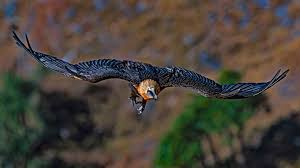
Chennai — The Synchronised Vulture Survey 2025 has emerged as a crucial environmental milestone, shedding light on the status of vulture populations across Tamil Nadu, Kerala, and Karnataka. Spearheaded by the Tamil Nadu Forest Department, the survey revealed a steady increase in the number of vultures—an encouraging sign for conservationists and ecologists alike.
Conducted on February 27 and 28, 2025, the Synchronised Vulture Survey 2025 covered 106 strategic locations across the three southern states. Tamil Nadu alone contributed 33 sites to this region-wide assessment, with high-density counts recorded in the Mudumalai and Sathyamangalam Tiger Reserves. The survey documented 320 vultures in total, reflecting the success of targeted conservation efforts and renewed focus on ecological monitoring. 
What is the Synchronised Vulture Survey 2025 all about?
The survey is a coordinated scientific initiative designed to assess the population, nesting behavior, and habitat spread of vultures in southern India. For the first time, the states of Tamil Nadu, Kerala, and Karnataka carried out a synchronised census, thereby enabling researchers to avoid duplications, track cross-border movements, and establish a comprehensive dataset on vulture demographics.
Up to 220 personnel—including forest officials, wildlife biologists, students, and NGOs—participated in the Tamil Nadu segment alone. These collective efforts have made the Synchronised Vulture Survey 2025 one of the largest regional initiatives for scavenger bird conservation in recent history.

Must Read: From Decline to Revival: Vulture Numbers Increase in Latest Southern States Census
Why is this survey critical for the environment?
Vultures play an indispensable ecological role as natural scavengers. By feeding on animal carcasses, they prevent the spread of diseases, recycle nutrients into the ecosystem, and reduce the population of secondary scavengers like feral dogs, which can spread rabies. The decline in vulture populations in recent decades—primarily due to the veterinary use of diclofenac—led to a spike in carcass decay, zoonotic threats, and imbalance in food chains.
The findings of the Synchronised Vulture Survey 2025 underscore a turning point in this narrative. With the diclofenac ban firmly in place, alongside efforts such as safe carcass disposal, increased water sources in reserves, and habitat preservation, Tamil Nadu is witnessing a slow yet stable recovery of its vulture species.

Why are vultures important for nature?
Often overlooked in conservation dialogues, vultures are the real voice of nature’s health. Their survival is intricately linked with the ecological integrity of forests and grasslands. The presence of vultures signals a functioning ecosystem—where prey-predator dynamics, species interactions, and disease controls are in balance.
Their decline serves as a warning indicator of ecological distress, making them a keystone species in environmental assessments. The revival in numbers, as documented in the Synchronised Vulture Survey 2025, signifies that natural ecosystems are regaining their stability through science-backed and policy-driven conservation.
How does this connect to broader conservation strategies?
The survey highlights a model of cooperative conservation—an approach vital for a country as ecologically diverse as India. It represents effective inter-state coordination, stakeholder engagement, and data-backed policymaking. These are pillars of contemporary environmental governance and sustainability—subjects deeply relevant for understanding India’s biodiversity frameworks.
Such efforts also reinforce the integration of traditional ecological knowledge with modern conservation science. For example, in regions like the Nilgiris, vultures have been culturally associated with natural purification—offering an opportunity to blend heritage conservation with ecological revival.
Leave feedback about this