
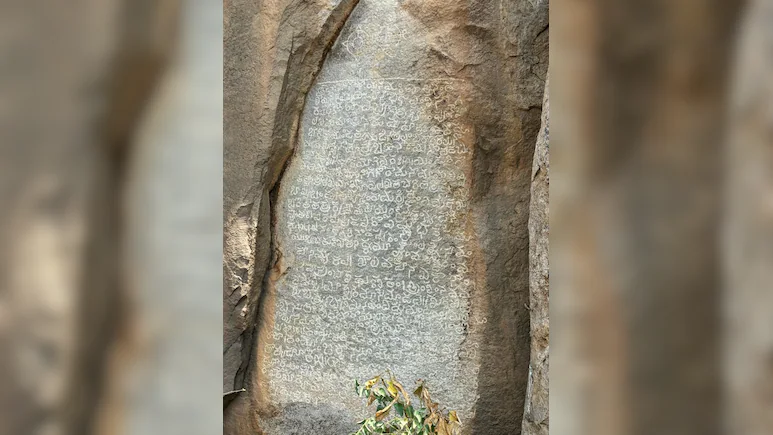
A remarkable 500-year-old Telugu rock inscription has been discovered in Telangana’s Anantagiri by the Archaeological Survey of India (ASI), offering a new glimpse into the region’s historical and cultural heritage. The inscription, dating back to 1517 CE, was found at Narasimhulagutta in Rajanna Sircilla district. It is dedicated to various local Hindu deities and records the construction of a Vishnu temple atop a hill, highlighting the deep spiritual and architectural legacy of the area.
A New Chapter in Telangana’s History
Telangana is known for its rich collection of ancient Telugu inscriptions, and this latest discovery further strengthens its historical significance. Experts believe the inscription provides crucial insights into the evolution of the Telugu script and temple construction during that era. This find follows a series of archaeological discoveries in Telangana and neighboring Andhra Pradesh, where inscriptions from 800 to 2000 years ago were recently unearthed in the Lankamala Reserve Forest.
In addition to inscriptions, prehistoric rock art was also discovered in Andhra Pradesh, depicting animals, geometric patterns, and human figures from the Megalithic period. These discoveries underscore the region’s deep historical roots and the continuous cultural evolution over millennia.
Historical Significance of Rock Inscriptions in Telangana
Telangana has long been home to significant Telugu rock inscriptions, with some dating back as early as 420 CE. The Keesaragutta inscription is considered the oldest known Telugu record in the state, while other important inscriptions have been found in Bommalagutta (Karimnagar) and Warangal from the 9th century CE. In 2023, ASI teams discovered inscriptions from the Chalukya period in Vikarabad’s Kankal village, highlighting the enduring influence of various dynasties on the region’s history.
The recent inscription found in Anantagiri adds to this growing body of evidence, offering valuable information about Telugu heritage, religious practices, and architectural advancements in temple construction during the early 16th century.
Preservation and Future Exploration
With ongoing archaeological discoveries, historians and conservationists are emphasizing the need for preservation and further exploration of these historical artifacts. Rock inscriptions are vulnerable to natural erosion and human activities, making their documentation and protection a priority. Scholars urge the government and heritage organizations to take necessary steps to safeguard these invaluable pieces of history for future generations.
Seasoned Diplomat Nidhi Tewari Joins PMO as Modi’s Private Secretary
Leave feedback about this