
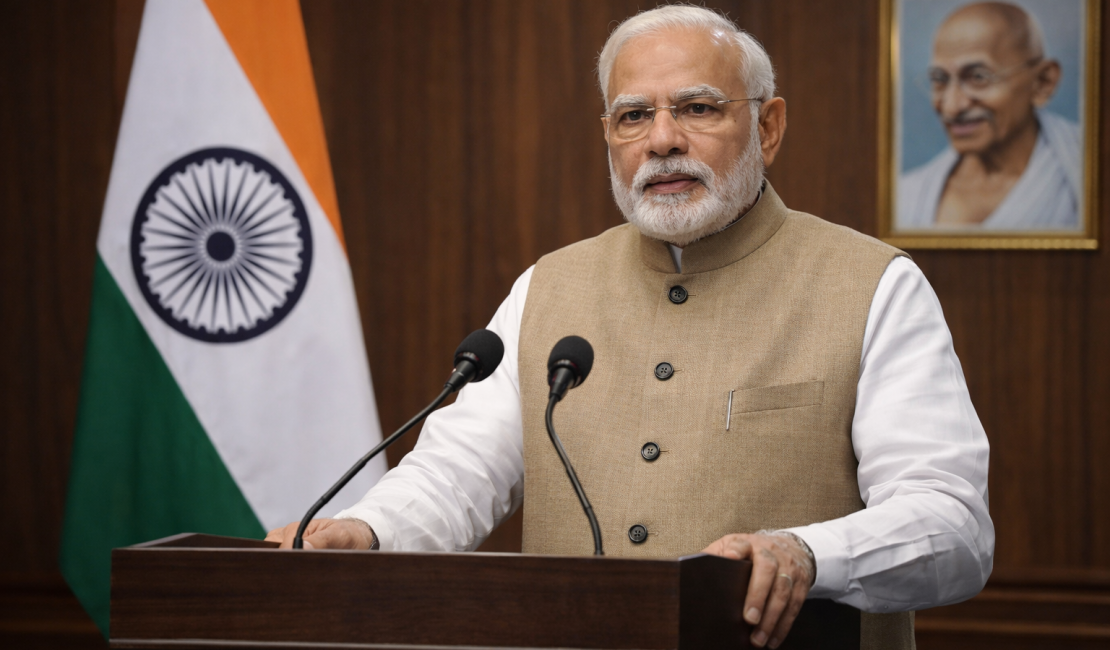
When a national address becomes a political flashpoint
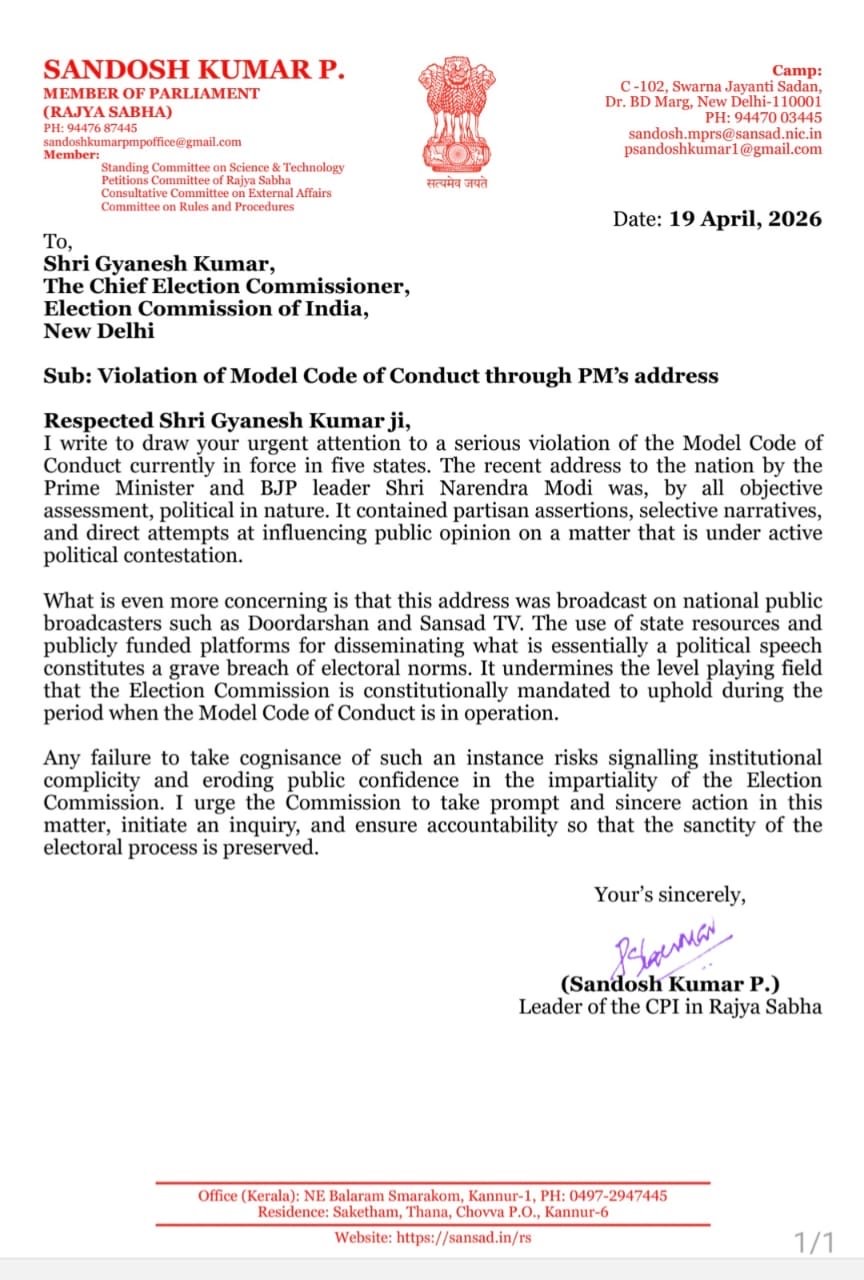
A complaint by CPI Rajya Sabha MP P. Sandosh Kumar to Chief Election Commissioner Gyanesh Kumar has brought the spotlight back on the Model Code of Conduct violation debate. The letter alleges that Prime Minister Narendra Modi’s recent address to the nation carried partisan undertones at a time of active political contestation.
What has happened? — A complaint that raises larger questions
In his communication to the Election Commission of India, Kumar argued that the Prime Minister’s speech contained “selective narratives” and attempted to influence public opinion. While the government has not officially responded to the allegation, the issue has revived scrutiny over what constitutes a Model Code of Conduct violation in the context of speeches delivered by incumbents.
At the core of the dispute is a familiar question: when does a government communication cross over into political messaging?
Background and context — What the Model Code actually says
The Model Code of Conduct (MCC) is a set of guidelines issued by the Election Commission to ensure a level playing field during elections. It comes into force from the date elections are announced and applies to political parties, candidates, and those in power.
The MCC does not have statutory backing, but its authority rests on consensus and enforcement by the Commission. Among its key provisions is the prohibition on using official platforms for electoral advantage and avoiding announcements or messaging that could sway voters.
The ambiguity, however, lies in interpretation—especially when incumbents address the nation in their official capacity.
Key players and stakeholders — Institutions at the centre
- The Election Commission of India, which interprets and enforces the MCC
- The ruling government, which must balance governance communication with electoral neutrality
- Opposition parties, which often act as watchdogs by flagging alleged violations
This triangular dynamic ensures that MCC enforcement is as much political as it is procedural.
Timeline of events — A recurring pattern
- 2014 & 2019 general elections: Opposition parties raised concerns over speeches by Prime Minister Narendra Modi, alleging communal or political undertones during campaign periods
- 2019: The Election Commission examined complaints regarding remarks in campaign speeches but largely gave clean chits, citing lack of explicit violation
- Recent years: Multiple complaints across parties regarding use of official platforms and messaging during elections
- Current instance: CPI MP flags the latest address as a potential Model Code of Conduct violation
These episodes underline that disputes over MCC interpretation are not new—they are structural.
Why this matters — More than just one speech
The debate goes beyond a single address. It touches on the credibility of electoral processes and the neutrality of institutions.
If speeches by those in power blur the line between governance and campaigning, it raises concerns about:
- Fair competition: Whether all parties operate on equal footing
- Institutional trust: The perceived independence of the Election Commission
- Democratic norms: The broader culture of political conduct
At the same time, overly strict interpretations risk limiting legitimate government communication.
What lies ahead — Clarity or continued ambiguity?
The Election Commission’s response, if any, will be closely watched. Historically, the Commission has taken a cautious approach, often relying on narrow interpretations of the MCC.
Going forward, the challenge will be to define clearer boundaries. As political communication becomes more sophisticated and media platforms expand, the scope for disputes over Model Code of Conduct violation is only likely to grow.
For now, the controversy serves as a reminder that India’s electoral framework, while robust, continues to grapple with the grey areas between power, messaging, and accountability.
Leave feedback about this