
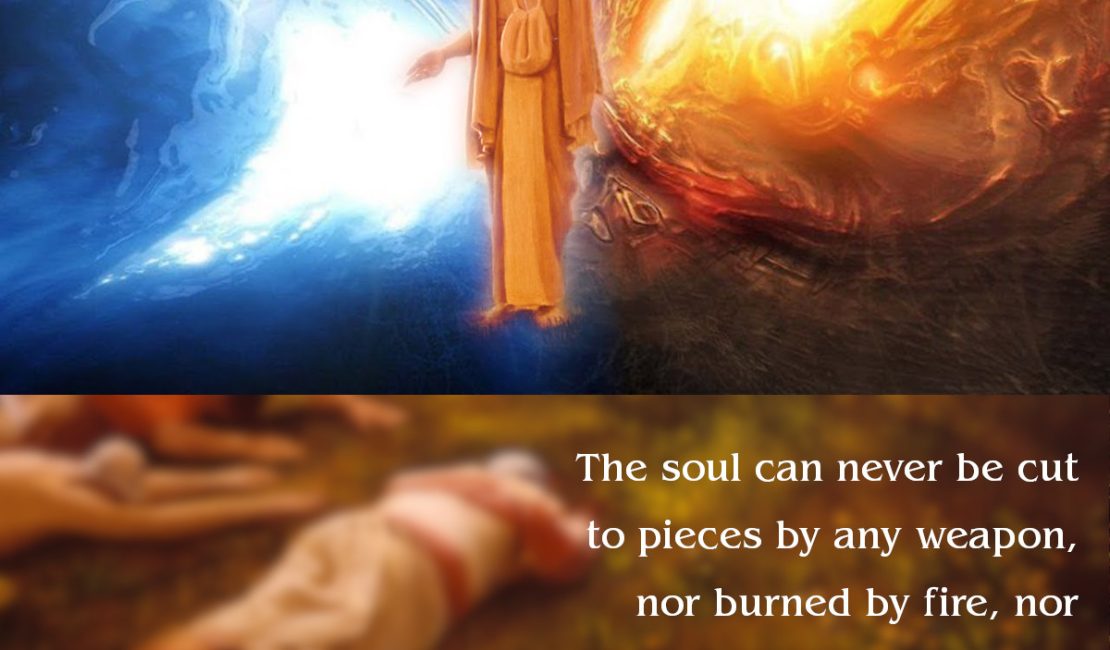
What is the Meaning of Death and Immortality?
For centuries, philosophers and spiritual traditions have debated the concept of death. Is it an absolute end or merely a transition to another existence? Ancient texts, particularly the Bhagavad Gita, provide a compelling perspective—one that reframes death not as a loss but as a gateway to eternity.
The phrase “The Joy of Death” may sound paradoxical, but within the Gita’s teachings, death is not a moment of sorrow but a continuation of an infinite journey. It asserts that while the body perishes, the soul remains untouched, eternal, and indestructible.
Who Believes in the Immortality of the Soul?
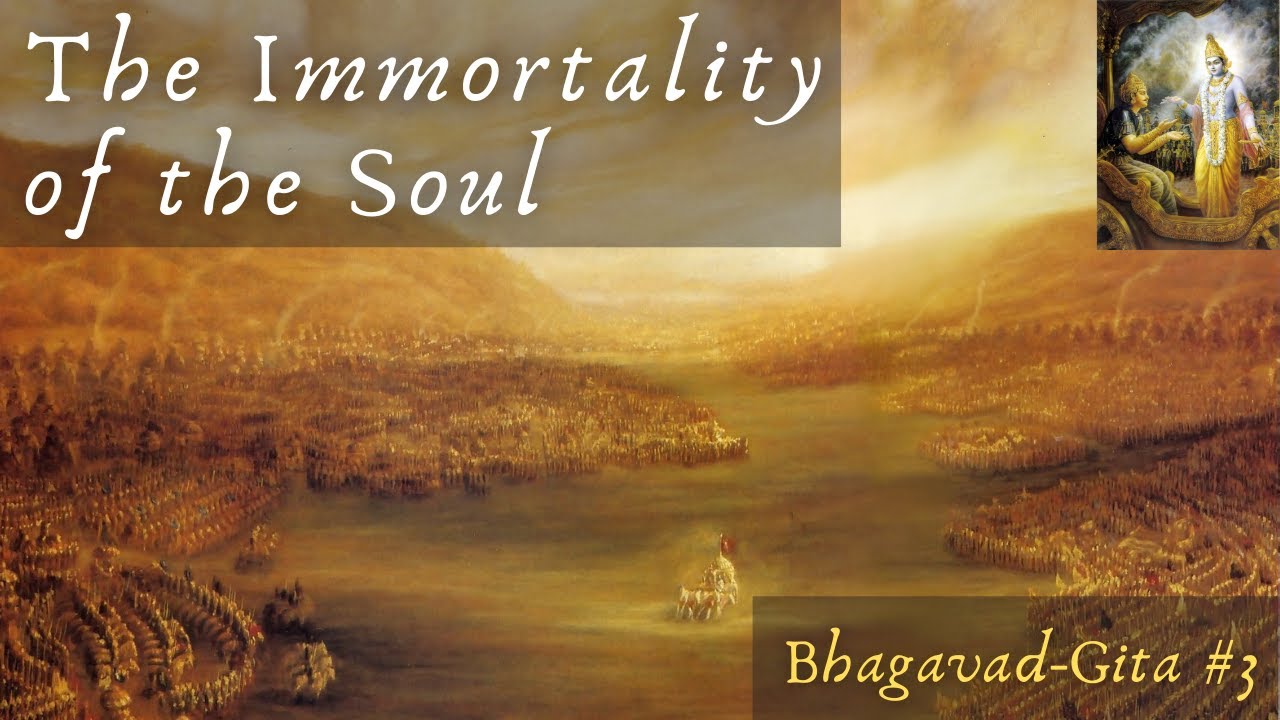
The belief in an immortal soul is deeply ingrained in Hinduism, Buddhism, and many Western philosophies. In the Bhagavad Gita, Lord Krishna tells Arjuna, “The soul is neither born, nor does it die. It is unborn, eternal, ever-existing, and primeval. It is not slain when the body is slain.” (Bhagavad Gita 2.20).
Similarly, Greek philosophers like Plato echoed this belief, arguing that the soul exists beyond physical life. Even in modern times, scientists studying near-death experiences and consciousness suggest that awareness might persist beyond the body.
When Did This Perspective First Emerge?
The concept of the soul’s immortality dates back thousands of years. The Bhagavad Gita, written between the 5th and 2nd centuries BCE, presents one of the earliest and most profound discussions on this topic. Other ancient cultures, such as the Egyptians and Greeks, also embraced the idea of life beyond death.
However, as materialist philosophies gained prominence, especially in the modern scientific era, perspectives shifted toward seeing death as a final end. Yet, the spiritual view remains powerful, influencing millions worldwide.
Where Do These Beliefs Still Hold Strong?
In India, belief in “The Joy of Death” persists within Hindu, Buddhist, and Jain traditions, where reincarnation and karma play a central role. Similar beliefs exist in Tibetan Buddhism and certain indigenous cultures in Africa and South America.
Even in Western societies, near-death experience studies, reincarnation research, and the rise of spiritual movements continue to challenge the idea of death as the absolute end. The growing field of consciousness studies suggests that material explanations may not fully capture the complexity of human existence.
Why Do People Fear Death if the Soul is Immortal?
Despite ancient wisdom, fear of death remains one of the most universal human anxieties. The Bhagavad Gita suggests that this fear stems from identification with the physical body rather than the eternal soul. It urges individuals to shift their perspective—death is merely a change, much like shedding old clothes for new ones.
Philosophers like Socrates, who faced death with unwavering calm, shared this view. He famously stated, “To fear death, gentlemen, is nothing other than to think oneself wise when one is not.” This echoes the Gita’s teachings that true wisdom lies in recognizing the soul’s eternal nature.
How Can This Perspective Change the Way We Live?
If death is not an end but a transition, how should we approach life? The Bhagavad Gita advocates for detachment and fearless living—to act with righteousness (dharma) without being bound by fear or attachment to outcomes.
Many spiritual teachers encourage meditation, self-inquiry, and mindfulness as paths to realizing the soul’s immortality. Understanding “The Joy of Death” can transform how we live—less fearfully, more purposefully, and with greater inner peace.
A New Perspective on Life and Death
In a world that often sees death as the final curtain, the Bhagavad Gita offers a radically different view. It invites us to embrace the idea that life and death are not opposites but part of an eternal cycle.
The question remains: If the soul is truly immortal, what are we so afraid of? The answer may lie not in the end of life, but in how we choose to live it.
Unbelievable But True: Devotees Reveal Mystical Encounters with Neem Karoli Baba
Leave feedback about this