

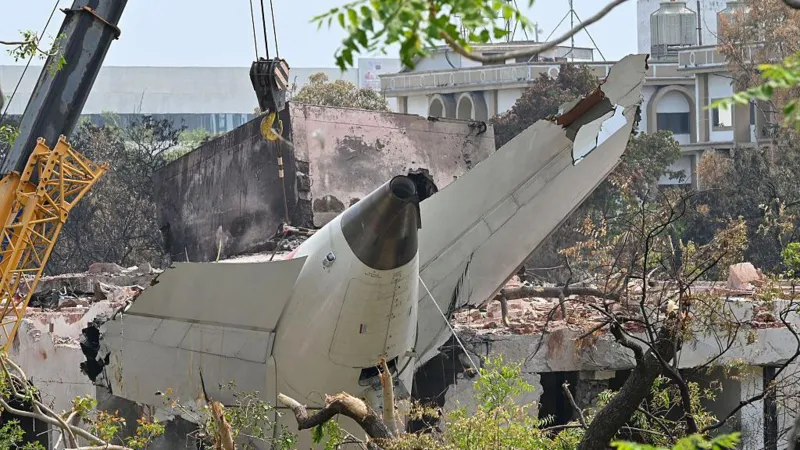
Ahmedabad — The catastrophic Air India crash that killed 241 people and destroyed a Boeing 787 in Ahmedabad is fast becoming more than just a national tragedy. With a staggering ₹39.4 billion ($475 million) insurance claim underway, the ripple effects are now reaching far beyond India’s borders—redrawing the contours of the global aviation insurance impact.
This massive claim, one of the largest in India’s aviation history, has triggered alarm bells among global reinsurers. With domestic insurers having offloaded more than 95% of their aviation portfolios to international reinsurers, the financial burden is expected to fall primarily on global players. The magnitude of the claim has ignited urgent discussions within the global insurance community about recalibrating risk exposure in emerging markets.

Ramaswamy Narayanan, Chairman of the General Insurance Corporation of India (GIC Re), acknowledged that the crash has set a new precedent. “It’s likely one of the biggest claims we’ve handled in aviation,” he stated, highlighting that just the hull and engine alone accounted for $125 million. Liability for loss of lives—especially of foreign nationals—is projected to push the total up by another $350 million.
The true global aviation insurance impact lies not in the claim itself but in its cascading consequences. Analysts warn that premiums for aviation coverage—already high in high-risk markets—could now spike even further in India and similar economies. Reinsurers, dealing with razor-thin margins, may begin restricting coverage or revising underwriting policies for long-haul carriers flying wide-body jets like the Dreamliner.
“It’s a wake-up call,” said Swarup Kumar Sahoor, a senior analyst at GlobalData. “This crash could become a textbook case for insurance restructuring, especially in developing aviation markets.”
Adding complexity to the situation is the legal framework for international victims. Liability claims involving foreign nationals are governed by compensation rules in their home countries, which often demand far higher payouts than Indian statutes. This will likely prolong the claim settlement process and add to the strain on reinsurers.

What began as a tragic event on Indian soil is rapidly evolving into an international financial and regulatory inflection point. The global aviation insurance impact of this single incident could manifest in new reinsurance models, tighter terms, and costlier policies—changing the air travel landscape for years to come.
For the aviation industry, the wreckage left behind isn’t just physical—it’s fiscal, legal, and systemic. The flight may have lasted only seconds, but the consequences are now measured in billions—and still counting.
Investigators Zero In on Air India Crash Sequence After Black Box Discovery
Air India Plane Crash: A Deafening Roar, a Fiery Plunge: Ahmedabad Wakes to a National Tragedy
Leave feedback about this