
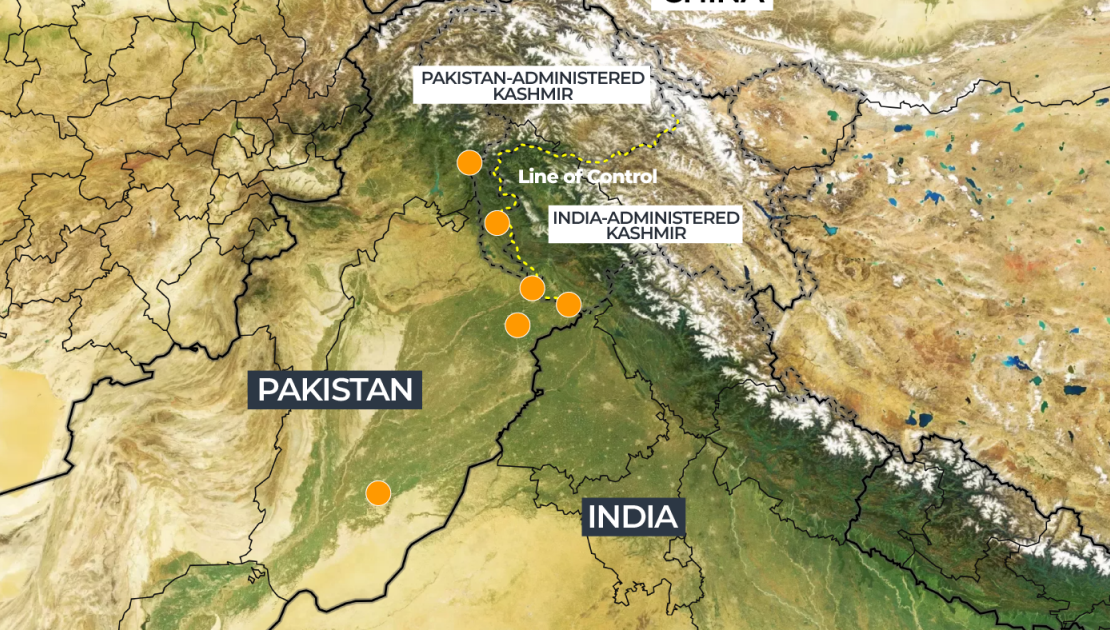
New Delhi: In the aftermath of India’s bold retaliatory Operation Sindoor, India’s air defence network delivered a crushing response to an escalated aerial strike from Pakistan, neutralising multiple threats including drones, cruise missiles, and even a Pakistan Air Force F-16.
The coordinated attack from Islamabad targeted key Indian military facilities across Jammu, Punjab, and parts of Gujarat. However, India’s layered aerial shield — integrating indigenous and joint-developed systems — ensured no incursion succeeded.
At the forefront was the Akash missile system, a medium-range surface-to-air weapon designed by DRDO. With a strike range of 45 to 70 km, it swiftly neutralised low-altitude drones and loitering munitions. The Akash-NG variant, enhanced with advanced radar and ECCM features, reinforced its role as a frontline barrier in India’s air defence network.
Complementing Akash’s coverage, the Medium-Range Surface-to-Air Missile (MRSAM) system—co-developed with Israel—intercepted high-speed targets up to 100 km away. Armed with active radar homing and vertical launch capabilities, MRSAM’s integration with the IAF’s Integrated Air Command & Control System (IACCS) ensured precise engagement of incoming threats.
On the final perimeter, Zu-23-2 anti-aircraft guns provided terminal defence. Though based on older technology, these twin-barreled guns proved instrumental in destroying any drone that slipped past the missile layers, offering an effective and affordable solution in dense combat scenarios.
What made the defensive response formidable was the seamless coordination of sensors, shooters, and electronic warfare units. Real-time radar fusion through the IACCS enabled threat prioritisation and dynamic interception. In addition, jamming and spoofing techniques rendered Pakistani drone swarms ineffective, many of which crashed in Indian territory, including regions near Bhuj and Pathankot.
Government sources confirmed the successful downing of a Pakistani F-16 and possibly a JF-17 during the engagement. Earlier in the day, the Russian-origin S-400 Sudarshan Chakra was also reportedly activated, adding another strategic layer to India’s air defence network.
The robust aerial response not only prevented any damage to Indian assets but also underlined New Delhi’s growing reliance on indigenous defence technologies like Akash while strategically leveraging international partnerships such as the MRSAM program.
With rising tensions in the region, India’s air defence network has emerged as a critical shield, enabling both deterrence and defence with precision and layered resilience.
Jammu on Alert: India’s Air Defence Response to Pakistan Neutralizes Aerial Intrusion
National Security First: Pakistan-Origin Content Ban by I&B Ministry Targets Streaming Services
Air Raid Sirens, Red Flashes: Jammu on Edge After India’s Counter-Terror Strikes
Flashes, Sirens, and Panic: Videos Show Extent of Pakistan Drone and Missile Attack on Jammu
Leave feedback about this